About Barbara Zeschmar-Lahl

This author has not yet filled in any details.
So far Barbara Zeschmar-Lahl has created 507 blog entries.

Preview of the Regulatory Developments @ Regulatory Summit Europe 2026, Brussels, 20.4.2026

February 20, 2026

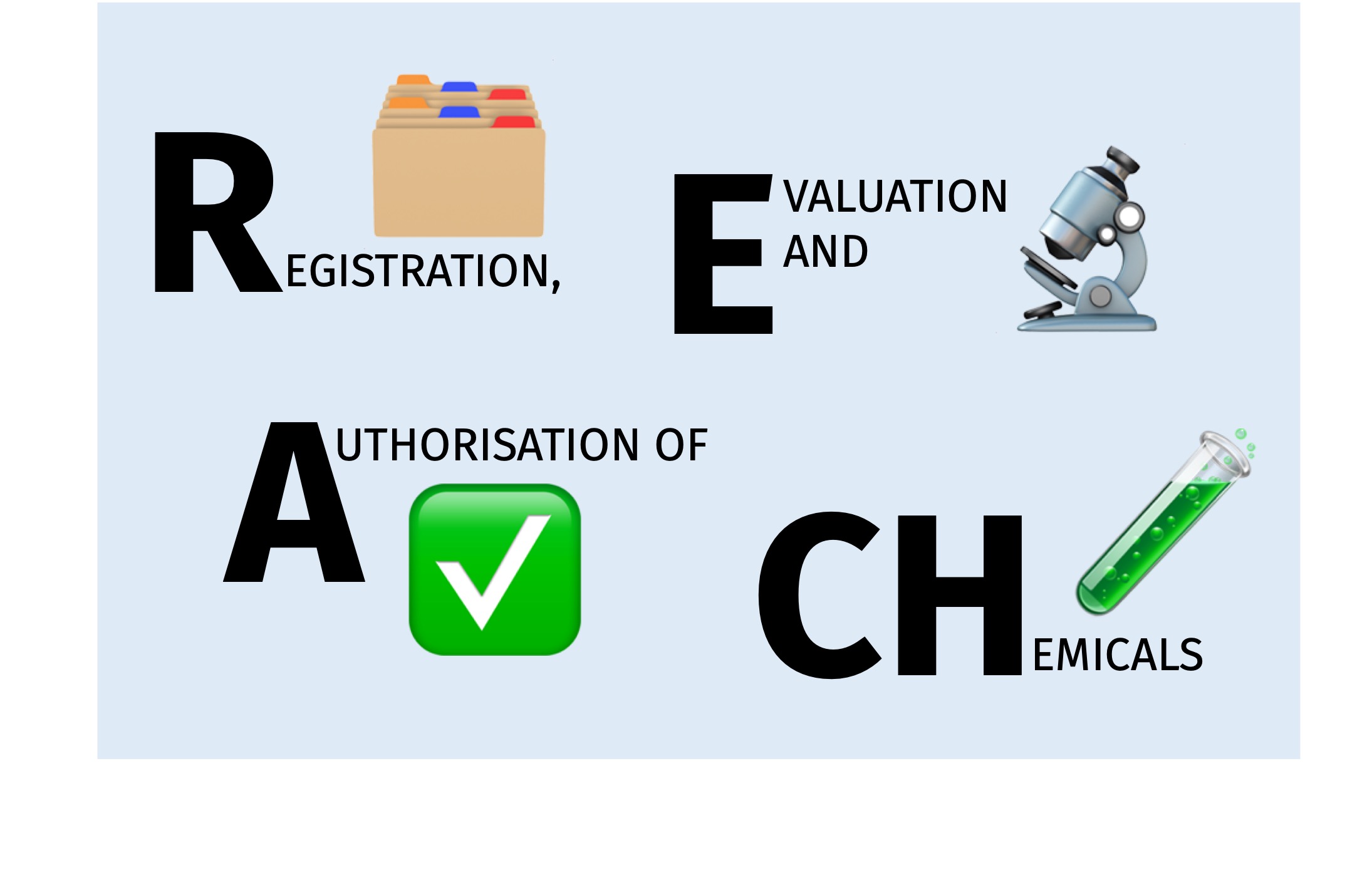
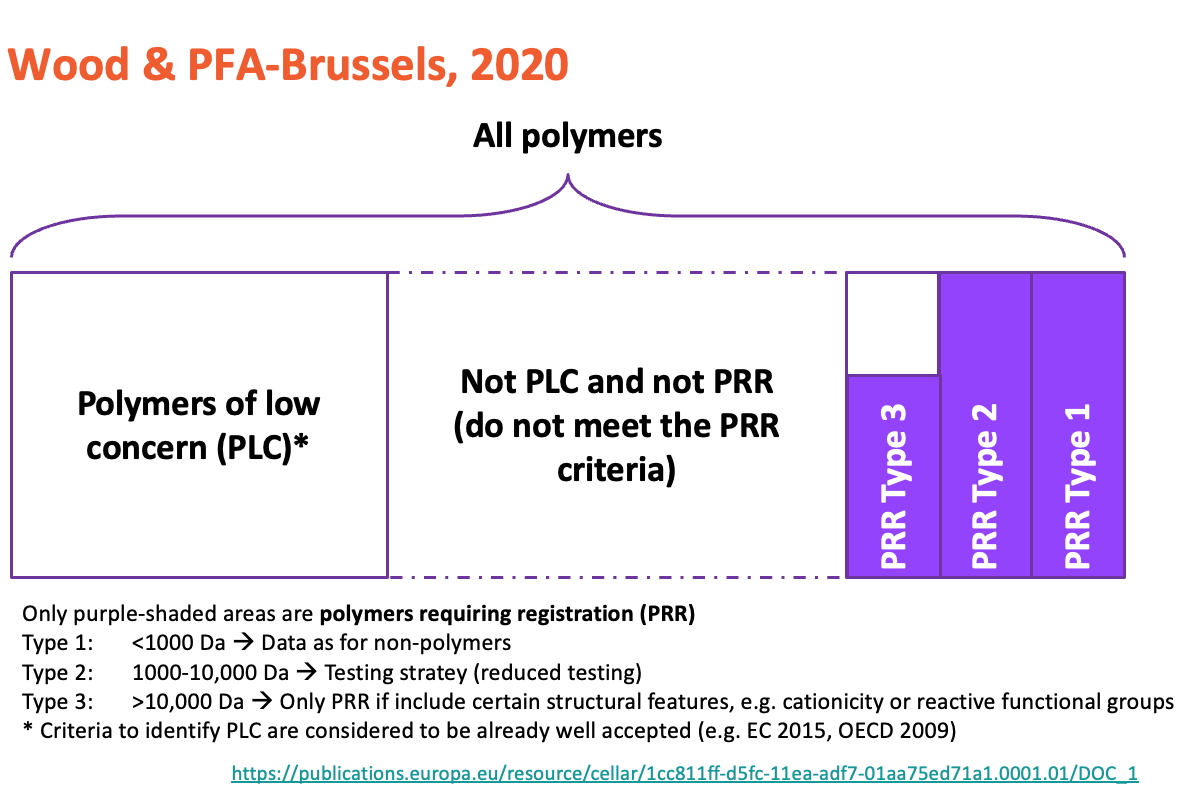
Twenty years ago, exempting polymers from the registration requirement under REACH was a political compromise. As part of its 2020 Chemicals Strategy for Sustainability (CSS), the European Commission has also announced a comprehensive revision of the REACH Regulation. Among other things, the registration requirement is to be extended in future to certain polymers of concern (PoC). The criteria for classification as PoC are currently still under discussion.

At the Regulatory Developments @ Regulatory Summit Europe 2026 on April 20, 2026, in Brussels,
Prof. Dr. Uwe Lahl will give a presentation entitled What are the concerns around plastics and why do we need to regulate them? He will look into the questions:

  • What scientific reasons are there today for supplementing REACH now?
  • What could a stepwise integration look like?

Further details can be found on the event website.

Event website

Plastics recycling and hazardous substances – Risk Cycle 2026

February 9, 2026

New plastics consist of increasingly complex additive formulations and polymers. Can the recycling of mixed packaging plastics produce new high-quality products, or is the use of recycled materials in consumer products actually hazardous? In his presentation at the Innsbruck Waste and Resource Day 2026 on February 4, 2026, on the topic of “Plastics Recycling and Hazardous Substances – Risk Cycle,” Prof. Dr. Uwe Lahl not only addressed these questions, but also presented the latest findings and political developments in this area.

In view of the topicality of this issue and the upcoming discussions at EU level, we are making this article available in English for all interested parties:

  • Lahl U., Zeschmar-Lahl B. (2026): Plastics recycling and hazardous substances – Risk Cycle 2026. Innsbruck Waste and Resources Day 2026 – Material Flows in the Cycle – Challenges & Opportunities – Quotas & Pollutants (Innsbrucker Abfall- und Ressourcentag 2026 – Stoffströme im Kreislauf – Herausforderungen & Chancen – Quoten & Schadstoffe), February 4, 2026. DOWNLOAD

Referring publications:

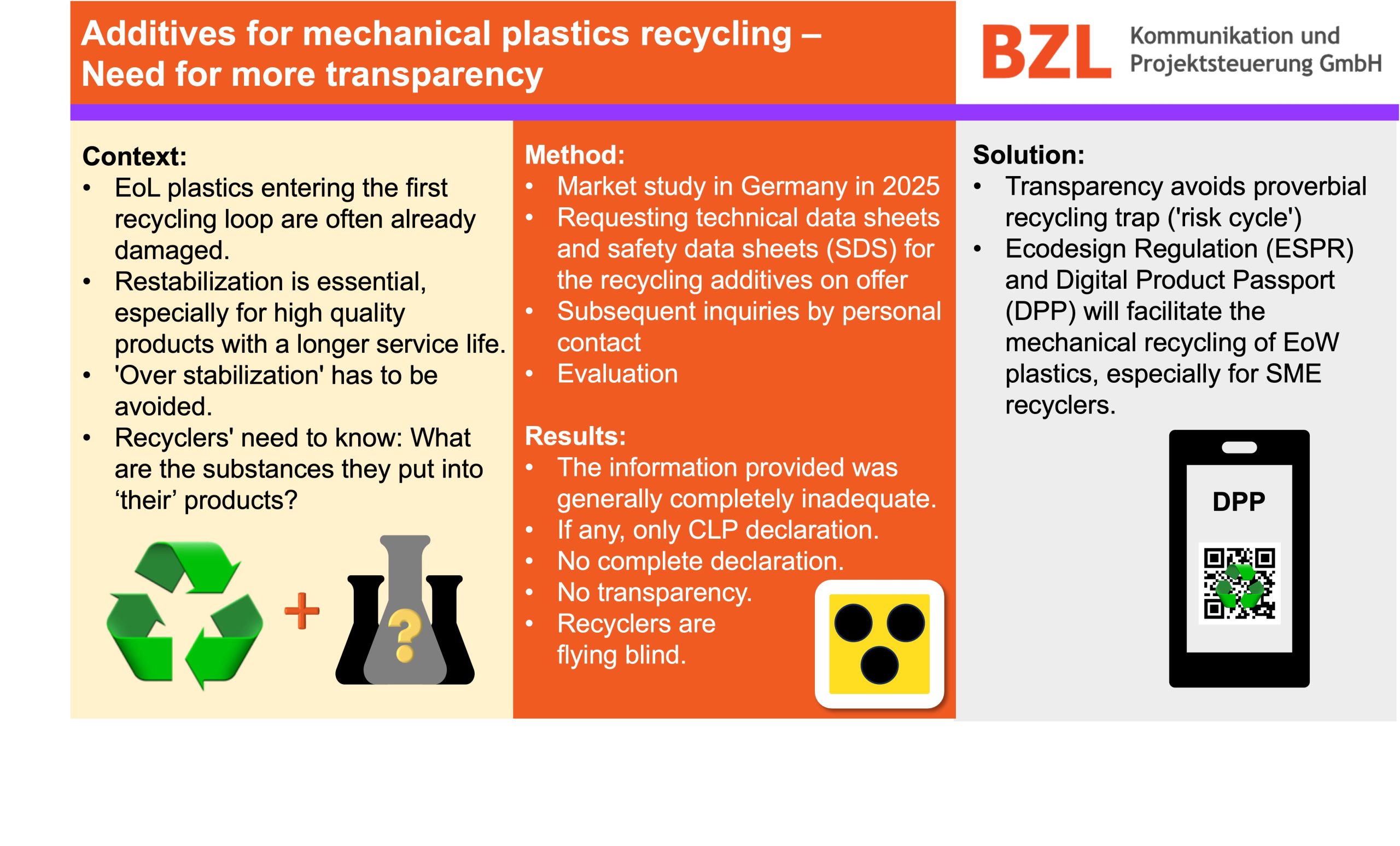
  • Lahl U., Zeschmar-Lahl B. (2025): Der neue Markt an Recycling-Additiven – Handlungsbedarf für den Gesetzgeber. Müll und Abfall 7, 376-382. ONLINE
  • DGAW (2025): Ressourcen.Neu.Denken. Podcast, Folge 41. ONLINE
  • Lahl U., Zeschmar-Lahl B. (2024): Material Recycling of Plastics—A Challenge for Sustainability. Sustainability 2024, 16, 6630. ONLINE
  • Lahl U., Lechtenberg D., Zeschmar-Lahl B. (2024): Kunststoffe in der Abfallwirtschaft – closing the loop? Österr Wasser- und Abfallw (2024) 76, 7–8. ONLINE
  • Lahl U., Lechtenberg D., Zeschmar-Lahl B. (2024): Kunststoffrecycling und gefährliche Stoffe – RISK CYCLE. Müll und Abfall 4, 195–204. ONLINE – Beitrag basierend auf der Erstveröffentlichung in Abfallwirtschaft und Energie 1 (2024) ONLINE

Europe after 2030 – The Development of Waste Management into an Industrial Location Factor – Update (in German) (2026)

Lahl U., Gosten A., Kummer B., Quicker P., Zeschmar-Lahl, B. (2026): Europa nach 2030 – Die Entwicklung der Abfallwirtschaft zum industriellen Standortfaktor – ein Update. In: Thiel S., Thomé-Kozmiensky E., Quicker P., Gosten A., Stengler E. (Hrsg.): Abfallwirtschaft und Energie 3, 2–19, 2026 (in German)

The authors‘ proposal is to rely on a single central regulation and to achieve a complete conversion of the raw material base of the plastics industry (chemical industry) by 2050 via a ramped-up quota system (defossilization). This would mean that many existing or planned regulatory provisions could be abandoned. As soon as the chemical industry has the clarity to obtain its raw materials from biomass, for example, or by recycling its products, i.e. today‘s waste, design for recycling will automatically become the industry‘s central business model in its value chains.

A defossilization quota proposed by the authors would make it possible to formulate more ambitious targets and allow companies to also choose cheaper options for carbon supply (i.e. biomass and recycling). This would give the waste management industry a new but central role as a future supplier of raw materials to secure the industry‘s future.

By recognizing all three options for defossilization (biomass, recycling, CCU) as equivalent, as well as the equivalence of mechanical and chemical recycling of plastics and biomass, the economy would have the opportunity to develop technology competition and select the most economically advantageous options.

Defossilization would get a boost if today‘s waste incineration (in WtE plants) were to be recognized as chemical recycling if it separates CO2 from the exhaust gas and uses it chemically in the future. At the same time, however, it would be necessary to set the landfilling of municipal waste in Europe to zero and to proceed in a similar way with waste exports to developing and emerging countries.

In terms of industrial policy, Europe is currently in a difficult situation. Especially for member states such as Germany, the survival of their industry is at risk.

In addition to the energy supply, the supply of renewable carbon and its recycling is a crucial asset for the chemical industry. Germany and Europe should therefore continue to develop its internationally leading waste management infrastructure and establish it as a locational advantage.

Europe after 2030 – The Development of Waste Management into an Industrial Location Factor – Update (in German) (BKAWE, 28.1.2026)

January 28, 2026

Prof. Dr. habil. Uwe Lahl has delivered a keynote speech on “Ten claims for the Circular Economy” at the Berlin Conference on Waste Management and Energy 2026 (BKAWE26) on January 28, 2026. Back in spring 2025, he and his co-authors analyzed resource policy and waste management priorities in ten areas of action and identified key points that they believe can advance Europe as an industrial location (see our news item from May 16, 2025). They focused on plastics and biomass because these are important sources of renewable carbon for industry in Europe. In view of the differing but also critical responses to the paper, this analysis was refined and regulatory proposals were added for a legal framework that would enable investment in climate protection and the future of the chemical industry.

The key points developed here have since been combined with research findings from the nova-Institut and also published (see our news item from January 14, 2026).

Below you will find further links.

vivis: Abfallwirtschaft und Energie
BZL/nova-Report 2026

Risk evaluation of perfluorinated surfactants as contribution to the current debate on the EU Commission’s REACH document (in German) (2005)

Fricke, M. and Lahl, U. (2005): Risk evaluation of perfluorinated surfactants as contribution to the current debate on the EU Commission’s REACH document. UWSF – Z. Umweltchem. Ökotox. 17 (1), 36‐49 (in German)

Background

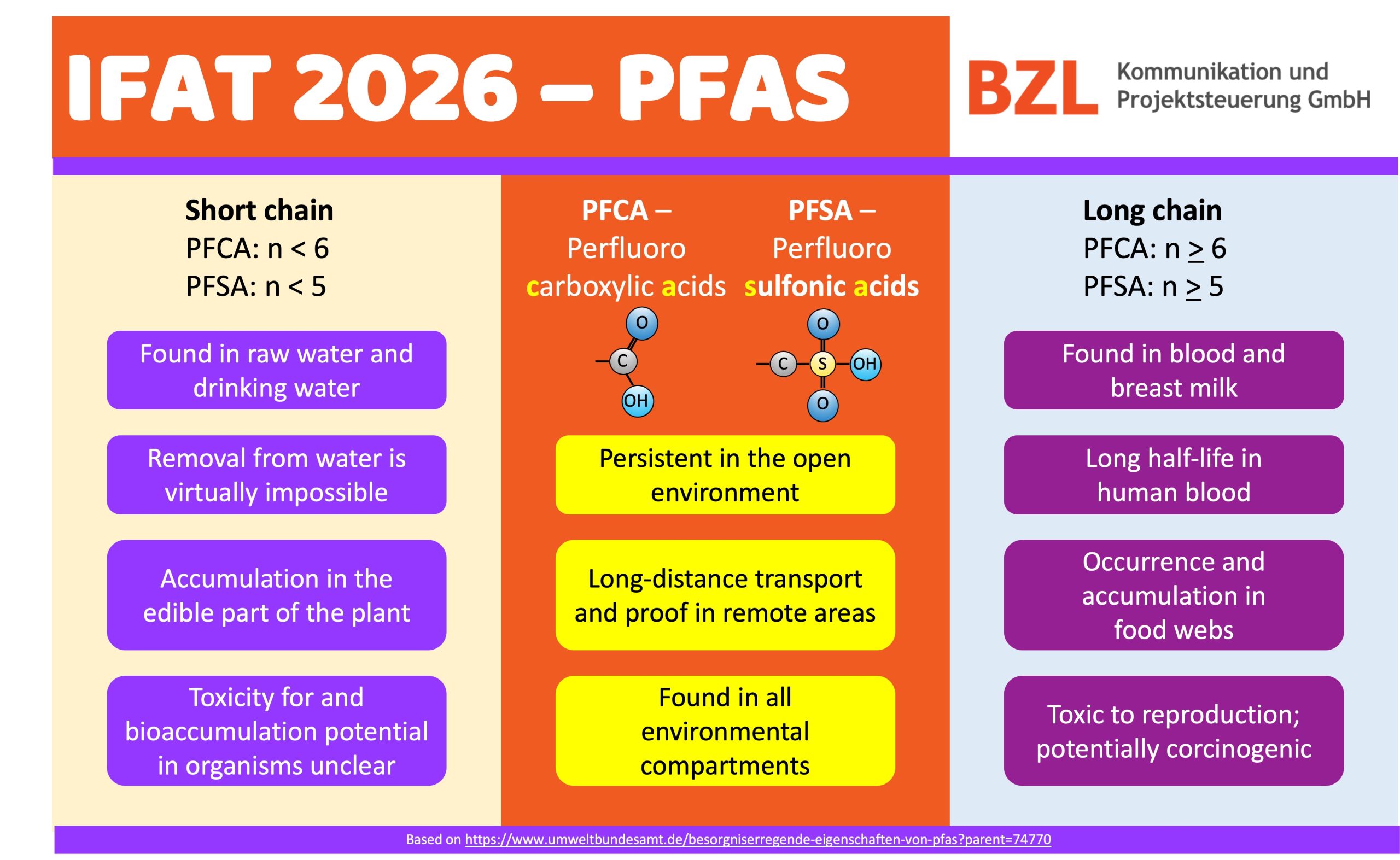
The analysis of the intrinsic effects of perfluorinated organic surfactants shows the group to have a characteristic overall picture:

  • high polarity
  • high thermal and chemical stability
  • ubiquitous distribution
  • non-biodegradability
  • multiple toxicity

In addition, certain substances belonging to this group (e.g. PFOS) exhibit a very long retention time in the human body. Toxic properties vary and, like the mechanisms for global distribution, have not been fully clarified.

In the meantime, individual members of this substance group have been (are being) removed from the market.

This report shows that in future the planned EU chemicals law (REACH) can be used to prevent such substances being regulated after they have been distributed in the environment and thus after damage has already occurred. To this end, however, the requirements for registration for low tonnage substances (1–10 tonnes/a) must be supplemented with specific tests (in particular on biodegradability)

Aim and scope

The aim of the work was to analyse the intrinsic properties and risks of a subgroup of fluorinated organic substances.

Results

A summarising article describes the toxic effects and properties of a group of substances selected from the approximately 30,000 existing substances. With regard to the ongoing debate on revising the European regulations of existing substances (REACH). it is apparent that standardised test requirements cannot be applied to impact and risk analyses which are at times highly complex. For governments, REACH only provides the starting points for this process in the form of prescribed standard tests. If a substance (or a substance group) draws attention, more detailed tests must be carried out by the industry itself in the framework of responsible care and in the framework of the evaluation step of REACH. It is therefore important that the standard requirements of REACH are selected appropriately. In this respect, the study reveals some serious deficiencies in the Commission proposal.

Conclusion

The standard information for low tonnage substances (1–10 tonnes/a) must be supplemented in particular with an obligatory test on biodegradability. The possibility provided by the REACH dossier to evaluate substances on the basis of group observarions (SAR, QSAR e.g.) is to be welcomed.


Recycling Becomes Feedstock for Europe – Let’s Dare More Autonomy (2026)

Lahl, U., Zeschmar-Lahl, B., Börger, L., Carus, M., vom Berg, C., 2026: Recycling Becomes Feedstock for Europe – Let’s Dare More Autonomy. https://doi.org/10.52548/LFPX3960

The publication shows how the goal of transforming or defossilizing Europe’s industry can be implemented step by step. The key points were developed on the basis of discussions within the EU think tank of the DGAW, presented and discussed at specialist conferences, and combined in this paper with research results from the nova-Institute.

It shows how legal areas can be better integrated at the EU level, which will lead to new priorities for industry and waste management. This includes classifying all recycling technologies, from mechanical and physical to chemical processes and even incineration with CO₂ capture and utilization, as equivalent, as all processes are needed for the conversion of the various waste fractions and target products. Overall, the ten proposals derived and analyzed in the paper also lead to a significant reduction in administrative burdens.

There are some important proposals that build on instruments already introduced by the EU, such as substitution quotas for selected plastics sectors. The authors also mention proposals that are currently being discussed or put forward by Member States. However, there are also proposals to phase out existing regulations. It is important that the proposals build on each other and are implemented in a coordinated manner as part of a coherent, step-by-step overall package.

Fortunately, greater autonomy is becoming increasingly mainstream in the EU and is also one of the cornerstones of the new EU Council Presidency. However, until this is put into practice, greater autonomy and resilience will remain nothing more than a narrative. And the road to achieving this will be paved with difficulties.

Recycling Becomes Feedstock for Europe – Let’s Dare More Autonomy

January 14, 2026

The publication shows how the goal of transforming or defossilizing Europe’s industry can be implemented step by step. The key points were developed on the basis of discussions within the EU think tank of the DGAW, presented and discussed at specialist conferences, and combined in this paper with research results from the nova-Institute.

It shows how legal areas can be better integrated at the EU level, which will lead to new priorities for industry and waste management. This includes classifying all recycling technologies, from mechanical and physical to chemical processes and even incineration with CO₂ capture and utilization, as equivalent, as all processes are needed for the conversion of the various waste fractions and target products. Overall, the ten proposals derived and analyzed in the paper also lead to a significant reduction in administrative burdens.

There are some important proposals that build on instruments already introduced by the EU, such as substitution quotas for selected plastics sectors. The authors also mention proposals that are currently being discussed or put forward by Member States. However, there are also proposals to phase out existing regulations. It is important that the proposals build on each other and are implemented in a coordinated manner as part of a coherent, step-by-step overall package.

Fortunately, greater autonomy is becoming increasingly mainstream in the EU and is also one of the cornerstones of the new EU Council Presidency. However, until this is put into practice, greater autonomy and resilience will remain nothing more than a narrative. And the road to achieving this will be paved with difficulties.

You can download the study via the link below.

Download Report

Amendment to the Packaging Act – is Germany missing an opportunity? (In German)

January 8, 2026

More packaging waste is to be recycled. However, in its amendment to the Packaging Act, the Federal Environment Ministry only wants to open two doors slightly for a better functioning circular economy: one for truly high-quality material recycling and one for chemical recycling, which would supply the chemical industry with raw materials for new plastics. The ministry thus continues to favor “downcycling.”

Read more about this in the latest article by Prof. Dr. Uwe Lahl in VDI energie + umwelt magazine.

VDI energie + umwelt (in German)

Plastic recycling and hazardous substances – Risk Cycle. Preview of the Innsbruck Waste and Resources Day 2026 (in German)

December 10, 2025

New plastics consist of increasingly complex additive formulations and polymers. Can the recycling of mixed packaging plastics still make new products safe, or is the use of recycled materials in consumer products actually hazardous? In his presentation (in German) at the Innsbruck Waste and Resource Day 2026 on February 4, 2026, on the topic of “Plastics Recycling and Hazardous Substances – Risk Cycle,” Prof. Dr. Uwe Lahl not only addresses these questions, but also presents the latest findings and political developments in this area. Below you will find a link to the program flyer and the conference website with the registration form.

Referring publications:

  • Lahl U.,  Zeschmar-Lahl B. (2025): Der neue Markt an Recycling-Additiven – Handlungsbedarf für den Gesetzgeber. Müll und Abfall 7, 376-382. ONLINE
  • DGAW (2025): Ressourcen.Neu.Denken. Podcast, Folge 41. ONLINE
  • Lahl U., Zeschmar-Lahl B. (2024): Material Recycling of Plastics—A Challenge for Sustainability. Sustainability 2024, 16, 6630. ONLINE
  • Lahl U., Lechtenberg D., Zeschmar-Lahl B. (2024): Kunststoffe in der Abfallwirtschaft – closing the loop? Österr Wasser- und Abfallw (2024) 76, 7–8. ONLINE
  • Lahl U., Lechtenberg D., Zeschmar-Lahl B. (2024): Kunststoffrecycling und gefährliche Stoffe – RISK CYCLE. Müll und Abfall 4, 195–204. ONLINE – Article based on the first publication in Abfallwirtschaft und Energie 1 (2024) ONLINE
DOWNLOAD Programme flyer
Link to registration
Go to Top