About Barbara Zeschmar-Lahl

This author has not yet filled in any details.
So far Barbara Zeschmar-Lahl has created 511 blog entries.

Amendment to the Packaging Act – is Germany missing an opportunity? (In German)

January 8, 2026

More packaging waste is to be recycled. However, in its amendment to the Packaging Act, the Federal Environment Ministry only wants to open two doors slightly for a better functioning circular economy: one for truly high-quality material recycling and one for chemical recycling, which would supply the chemical industry with raw materials for new plastics. The ministry thus continues to favor “downcycling.”

Read more about this in the latest article by Prof. Dr. Uwe Lahl in VDI energie + umwelt magazine.

VDI energie + umwelt (in German)

Plastic recycling and hazardous substances – Risk Cycle. Preview of the Innsbruck Waste and Resources Day 2026 (in German)

December 10, 2025

New plastics consist of increasingly complex additive formulations and polymers. Can the recycling of mixed packaging plastics still make new products safe, or is the use of recycled materials in consumer products actually hazardous? In his presentation (in German) at the Innsbruck Waste and Resource Day 2026 on February 4, 2026, on the topic of “Plastics Recycling and Hazardous Substances – Risk Cycle,” Prof. Dr. Uwe Lahl not only addresses these questions, but also presents the latest findings and political developments in this area. Below you will find a link to the program flyer and the conference website with the registration form.

Referring publications:

  • Lahl U.,  Zeschmar-Lahl B. (2025): Der neue Markt an Recycling-Additiven – Handlungsbedarf für den Gesetzgeber. Müll und Abfall 7, 376-382. ONLINE
  • DGAW (2025): Ressourcen.Neu.Denken. Podcast, Folge 41. ONLINE
  • Lahl U., Zeschmar-Lahl B. (2024): Material Recycling of Plastics—A Challenge for Sustainability. Sustainability 2024, 16, 6630. ONLINE
  • Lahl U., Lechtenberg D., Zeschmar-Lahl B. (2024): Kunststoffe in der Abfallwirtschaft – closing the loop? Österr Wasser- und Abfallw (2024) 76, 7–8. ONLINE
  • Lahl U., Lechtenberg D., Zeschmar-Lahl B. (2024): Kunststoffrecycling und gefährliche Stoffe – RISK CYCLE. Müll und Abfall 4, 195–204. ONLINE – Article based on the first publication in Abfallwirtschaft und Energie 1 (2024) ONLINE
DOWNLOAD Programme flyer
Link to registration

Ten Claims for the Circular Economy – preview of BKAWE26

November 30, 2025

Prof. Dr. habil. Uwe Lahl will deliver a keynote speech on “Ten claims for the Circular Economy” at the Berlin Conference on Waste Management and Energy 2026 (BKAWE26) on January 28, 2026. Back in spring 2025, he and his co-authors analyzed resource policy and waste management priorities in ten areas of action and identified key points that they believe can advance Europe as an industrial location (see our news item from May 16, 2025). They focused on plastics and biomass because these are important sources of renewable carbon for industry in Europe. In view of the differing but also critical responses to the paper, this analysis was refined and regulatory proposals were added for a legal framework that would enable investment in climate protection and the future of the chemical industry.

You can download the program flyer via the link below or use the link to the BKAWE26 website.


DOWNLOAD Flyer (in German)
BKAWE26 website (in German)

Presentation at the Advanced Recycling Congress on November 19, 2025, in Cologne available

November 23, 2025

At the Advanced Recycling Conference on November 19, 2025, in Cologne, Prof. Dr. Uwe Lahl gave a presentation entitled “Europe After 2030 – The Development of Waste Management into an Industrial Location Factor”, in which he outlined the contribution that the circular economy can make to the defossilization of raw material use in the chemical industry. The presentation is an update of a publication in Müll und Abfall 5, 2025.

The final version of his presentation for the lecture is now available.

Presentation ARC, 19.11.2025
Müll und Abfall 5, 2025 (in German)

Europe After 2030 – The Development of Waste Management into an Industrial Location Factor (ARC, 19.11.2025)

November 5, 2025

At the Advanced Recycling Conference on November 19, 2025, in Cologne, Prof. Dr. Uwe Lahl will give a presentation entitled “Europe After 2030 – The Development of Waste Management into an Industrial Location Factor”, in which he will outline the contribution that the circular economy can make to the defossilization of raw material use in the chemical industry. The presentation is an update of a publication in Müll und Abfall 5, 2025.

A critical aspect of the defossilisation of the industry is the focus of legislation in Brussels, which on the one hand places far too much emphasis on the hydrogen path and at the same time over-regulates initial investments in the development of infrastructure. In the past, Germany has also focused one-sidedly on financial support for individual transformation projects (capex funding). Current developments show that it is politically easier to implement these subsidies. However, this is not enough because the framework conditions must also be created so that the defossilized products are competitive and are then also purchased. The necessary regulation requires a smart policy mix that, on the one hand, sets binding targets at the level of the individual companies, but on the other hand also promotes the creation of reliable markets for defossilized products.

Further details can be found on the event website.

Advanced Recycling Conference 2025
Müll und Abfall 5, 2025 (in German)

Metrics are the key: development of criteria and indicators for measuring sustainability in international chemicals management

September 2, 2025 At the United Nations World Summit on Sustainable Development in Johannesburg in 2002, it was agreed to minimize the adverse effects of chemicals on humans and the environment by 2020. To implement this so-called ‘2020 target’, the ‘Strategic Approach to International Chemicals Management’ (SAICM) was established in 2006. As the mandate for SAICM ended in 2020, work on a successor framework began already in 2015. Due to the COVID pandemic, among other things, negotiations on the specific design were protracted. Finally, at the end of the 5th International Conference on Chemicals (ICCM5) on 30 September 2023 in Bonn under the German presidency, the ‘Global Framework on Chemicals’ (GFC) was adopted with the’ Bonn Declaration for a Planet Free of Harm from Chemicals and Waste’. The GFC was also given the mandate to develop indicators for the goals and targets adopted by the conference. This task is now being tackled. The GFC can also draw on the results of our project on indicators for future global chemicals and waste management, which was commissioned by the Federal Environment Agency. In brief: The indicators combine the concept of sustainable chemistry with the requirements of sound management of chemicals and waste. A list of the 23 most important indicators from this project was recently submitted to the GFC by the German representative in the responsible working group, Dr. Christopher Blum (Federal Environment Agency). We are pleased that the indicators developed in this project now serve as a basis for the responsible GFC working group (Open-Ended Ad Hoc Group on Measurability and Indicators). We want to continue to support this important approach of the GFC. The planned scientific publication on the indicators developed in this project has just been published:

C. Blum, B. Zeschmar-Lahl, E. Heidbüchel, H. C. Stolzenberg, K. Kümmerer, A. Becker and H. Friege: Metrics are the key: development of criteria and indicators for measuring sustainability in international chemicals management. RSC Sustainability, 2025, D5SU00135H. DOI: 10.1039/D5SU00135H. Received 26th February 2025, accepted 8th August 2025, first published on 2nd September 2025. Weitere Links: [/fusion_text][/fusion_builder_column][/fusion_builder_row][/fusion_builder_container]

Metrics are the key: development of criteria and indicators for measuring sustainability in international chemicals management (2025)

C. Blum, B. Zeschmar-Lahl, E. Heidbüchel, H. C. Stolzenberg, K. Kümmerer, A. Becker and H. Friege: Metrics are the key: development of criteria and indicators for measuring sustainability in international chemicals management. RSC Sustainability, 2025, D5SU00135H. DOI: 10.1039/D5SU00135H. Received 26th February 2025, accepted 8th August 2025, first published on 2nd September 2025

Supplementary files:


The new market for recycling additives – Need for action by the legislator (Müll und Abfall, 2025, in German)

July 11, 2025

The article by Prof. Dr. habil. Uwe Lahl and Dr. Barbara Zeschmar-Lahl on the topic “The new market for recycling additives – Need for action by the legislator“ has been published in Müll und Abfall 7, 2025.

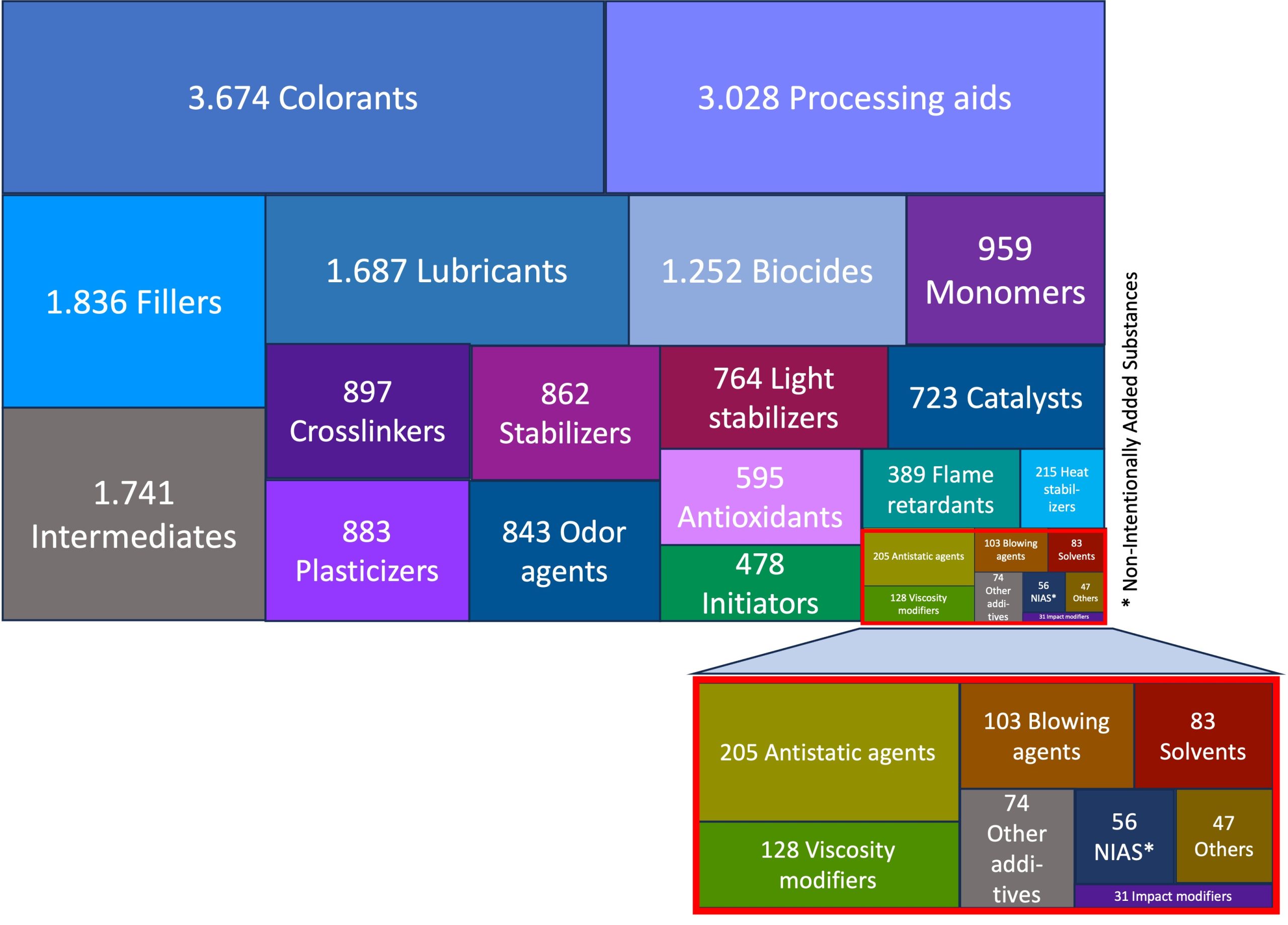
In recent years, a market for chemical additives to improve the quality of plastic recyclates has been established. High growth opportunities are expected for these additives. The products are very diverse and can be used, for example, for the post-stabilization of recyclates or to reduce unpleasant odors. There are also products on the market that can repair damaged polymers. And additives are available that improve the miscibility of inhomogeneous sorting fractions. On behalf of a plastics recycler, the authors have attempted to find out the chemical identity and basic formulation of these plastic additives. However, this information is mostly not disclosed. Even in the available safety data sheets, the composition of these products was regularly not included. Only in individual cases, declarable individual substances have been specified. However, it is known from discussions and the gray literature that highly reactive substances are sometimes used for these products, which are to be added directly to the hot melt in the extruder. Now that the SME recycling industry is already confronted with plastic waste containing banned additives from the past (risk cycle, legacy-chemicals), a new problem is emerging for the future: are these practices sufficiently safe? The authors advise caution here and therefore advise against the use of recycling additives whose chemical identity and basic formulation are not disclosed.

Below you will find a link to the order form at Erich Schmidt Verlag.


Müll und Abfall 7, 2025

The new market for recycling additives – Need for action by the legislator (Müll und Abfall, 2025, in German)

Lahl U., Zeschmar-Lahl B. (2025): Der neue Markt an Recycling-Additiven – Handlungsbedarf für den Gesetzgeber. Müll und Abfall 7, 376-382. https://doi.org/10.37307/j.1863-9763.2025.07.03

In recent years, a market for chemical additives to improve the quality of plastic recyclates has been established. High growth opportunities are expected for these additives. The products are very diverse and can be used, for example, for the post-stabilization of recyclates or to reduce unpleasant odors. There are also products on the market that can repair damaged polymers. And additives are available that improve the miscibility of inhomogeneous sorting fractions. On behalf of a plastics recycler, the authors have attempted to find out the chemical identity and basic formulation of these plastic additives. However, this information is mostly not disclosed. Even in the available safety data sheets, the composition of these products was regularly not included. Only in individual cases, declarable individual substances have been specified. However, it is known from discussions and the gray literature that highly reactive substances are sometimes used for these products, which are to be added directly to the hot melt in the extruder. Now that the SME recycling industry is already confronted with plastic waste containing banned additives from the past (risk cycle, legacy-chemicals), a new problem is emerging for the future: are these practices sufficiently safe? The authors advise caution here and therefore advise against the use of recycling additives whose chemical identity and basic formulation are not disclosed.

EU 2030 – Developing the circular economy into a location factor (DGAW, 20.6.2025, in German)

June 26, 2025

At the DGAW specialist event on 20.6.2025 in Berlin on the topic of EU 2030 – Developing the circular economy into a location factor, the contribution that the circular economy can make to defossilizing the use of raw materials in the chemical industry was discussed. In his introductory speech, Prof. Dr. Uwe Lahl presented the DGAW position paper EU 2030 – Developing the circular economy into a location factor. He pointed out that the technical and political debate on climate protection focuses too much on the defossilization of the energy sector. “What is missing is an understanding of the importance of substances and molecules for defossilization”.

A critical aspect of the defossilisation of the industry is the focus of legislation in Brussels, which on the one hand places far too much emphasis on the hydrogen path and at the same time over-regulates initial investments in the development of infrastructure. In the past, Germany has also focused one-sidedly on financial support for individual transformation projects (capex funding). Current developments show that it is politically easier to implement these subsidies. However, this is not enough because the framework conditions must also be created so that the defossilized products are competitive and are then also purchased. In contrast, the DGAW position paper calls for a smart policy mix for the necessary regulation, which on the one hand sets binding targets at the level of the individual companies, but on the other hand also promotes the creation of reliable markets for defossilized products.

The updated version of his presentation is now available for download.

The PIK study cited on slide 2 has since been withdrawn. However, it is to be resubmitted for review after revision. More on this: PIK announcement dated December 3, 2025

Presentation (in German)
DGAW, 2025
Müll und Abfall 5, 2025
Go to Top